Walk into any store and you’ll see racks full of t-shirts that all look pretty similar at first glance. Same basic shape, same color options, same claims of being “soft” and “high quality.”
But pick up two shirts side by side and the difference becomes obvious fast. One feels thin and a little rough. The other feels heavier, smoother, and just better made.
Knowing how to spot that difference before you buy saves you money, time, and the annoying cycle of replacing shirts every few months. Here’s exactly what to look for.
Why Choosing the Right T-Shirt Actually Matters
A t-shirt seems like a small purchase, but it’s one of the most worn items in any closet. Get it wrong repeatedly, and you end up spending more over time while looking less put together.
Get it right, and you build a small collection of shirts that consistently feel good and look sharp, which is the entire idea behind quality clothing done well.
The Pattern Most Men Fall Into
Many guys buy multi-packs without checking fabric details, assuming all cotton tees are roughly the same. Then they’re surprised when the shirts shrink, pill, or lose shape within weeks.
Breaking that pattern starts with understanding what actually separates a forgettable shirt from one worth keeping.
Start With the Fabric Composition
The label on the inside of a t-shirt tells you more than the price tag ever will.
Look for 100% Cotton or High-Cotton Blends
Pure cotton breathes well and feels natural against skin. Blends with a small amount of elastane can add stretch, which some men prefer for a more relaxed fit.
Avoid shirts loaded with synthetic fillers like polyester in high percentages, since these tend to trap heat and feel less breathable.
Check for Fiber Type
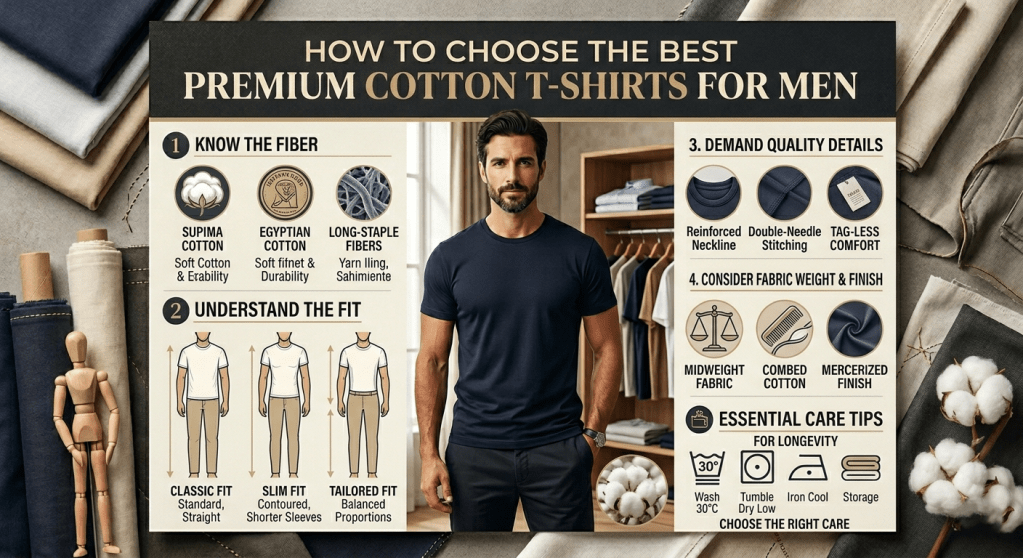
Names like Pima, Supima, or combed cotton usually signal longer, stronger fibers. These create smoother yarns that resist pilling and hold their shape far better than standard short-fiber cotton.
This single detail is often the clearest signal of premium apparel versus a basic, mass-produced shirt.
Pay Attention to Fabric Weight
Fabric weight, measured in GSM (grams per square meter), tells you a lot about how a shirt will perform.
The Sweet Spot
Most well-made t-shirts fall between 180 and 220 GSM. This range feels substantial without being too warm for daily wear.
What Too Light or Too Heavy Means
Anything under 150 GSM often feels thin and slightly see-through. Anything over 240 GSM can feel stiff or more suited to cooler weather than everyday comfort.
Finding that middle ground is part of what makes comfortable fashion actually comfortable, instead of just marketed that way.
Inspect the Construction Closely
Good fabric paired with sloppy construction still results in a shirt that won’t last. Always check how the shirt is actually put together.
Turn It Inside Out
Look at the seams around the shoulders, sleeves, and hem. Clean, even double stitching is a strong sign of quality. Loose threads or single stitching usually mean the shirt won’t hold up long.
Check the Collar
Gently stretch the neckline. A well-made shirt should spring back into shape. If it stays stretched out, that’s an early sign the collar will sag permanently after a few wears.
Examine the Hem
A properly finished hem lies flat and doesn’t curl or fray easily. This small detail often gets overlooked but makes a noticeable difference over time.
Get the Fit Right, Not Just the Size
Even premium cotton looks underwhelming in the wrong fit. Sizing charts help, but fit is about more than just measurements.
Shoulder Seams
The seam should sit right at the edge of your shoulder, not halfway down your arm or pulling tightly across your chest.
Sleeve Length
Sleeves should end roughly mid-bicep for most builds. Too long looks sloppy, too short can look intentionally cropped, which isn’t always the goal.
Body Taper
A slight taper at the waist creates a cleaner silhouette without clinging. This is one of the easiest ways to instantly upgrade from basic to stylish clothing.
Compare Pricing the Smart Way
Price alone doesn’t tell you much. Compare it against what you’re actually getting.
Cost Per Wear, Not Just Sticker Price
A $45 shirt worn 150 times costs far less per wear than a $12 shirt that falls apart after 15 washes. This is the real math behind getting a fair yard of deal instead of chasing the lowest number on the tag.
Watch for Vague Product Descriptions
If a listing doesn’t mention fabric composition, weight, or origin, that’s often a sign the brand isn’t prioritizing transparency, which usually reflects the product itself.
Consider How the Shirt Fits Into Current Fashion Trends
Style preferences shift, but a few clear patterns are shaping men’s basics right now.
Relaxed, Structured Silhouettes
Boxier fits with clean shoulder lines are replacing overly tight, slim cuts almost everywhere.
Earth Tones Over Basics
Olive, rust, and warm neutral shades are becoming just as common as classic black, white, and grey.
Heavier Weight Fabrics
Heavier GSM cotton, once mostly limited to streetwear, is now common across everyday premium clothing because it holds up better long-term.
Minimal Branding
Subtle or no visible logos is increasingly popular, putting the focus back on fabric quality and fit instead of flashy graphics.
Test Comfort Beyond the Fitting Room
A shirt might feel fine for thirty seconds in a store and completely different after a full day of wear.
Movement Test
Raise your arms, twist slightly, and sit down if possible. The shirt shouldn’t ride up dramatically or feel restrictive in any of these positions.
Breathability Check
Run your fingers across the fabric. It should feel smooth and slightly cool, not thick or plasticky, which often signals synthetic-heavy blends.
Skin Sensitivity
If you have sensitive skin, rougher fabric will be noticeable almost immediately, especially around the neckline and underarms.
How to Build a Reliable T-Shirt Collection
Once you know what to look for, building a solid rotation becomes much easier.
Start With Versatile Neutrals
Black, white, navy, and grey cover the widest range of outfits and occasions.
Add a Few Statement Tones
One or two earth-tone or muted color options add variety without overcomplicating your wardrobe.
Stick to One Reliable Fit
Once you find a cut that works for your body, stay consistent across colors. This makes mixing and matching effortless.
Buy Fewer, Better Pieces
This approach reflects the real idea behind premium fashion: not owning more, but owning things that consistently perform and look good.
Caring for Your Shirts So They Last
Even the best-made t-shirt needs proper care to stay in good shape.
Wash Cold
Hot water speeds up fiber breakdown and increases shrinkage risk significantly.
Skip High Heat Drying
Air drying or low-heat tumble drying helps maintain shape and reduces pilling over time.
Don’t Overpack the Washer
Crowded loads create more friction, which wears down fabric faster than necessary.
Frequently Asked Questions
What’s the most important factor when choosing a premium cotton t-shirt?
Fabric quality is the foundation, but fit and construction matter just as much. A great fabric in a poorly cut shirt still won’t look or perform well.
Is higher GSM always better?
Not necessarily. Higher GSM means heavier fabric, which is great for cooler weather but can feel too warm for hot climates. The 180 to 220 GSM range works well for most everyday situations.
How can I tell if a t-shirt is true premium cotton without seeing it in person?
Check the product description for fiber type, GSM weight, and stitching details. Brands offering real quality clothing usually share these specifics openly.
Are expensive t-shirts always better quality?
Not always. Price can reflect branding rather than actual material or construction quality. Always check fabric composition and stitching details regardless of cost.
How many premium t-shirts should I own?
Most men do well with six to eight versatile shirts in neutral tones, which covers a full week with room for laundry rotation.
Can premium cotton t-shirts work for both casual and slightly dressed-up looks?
Yes. A well-fitted tee works fine on its own or layered under jackets and overshirts for a relaxed, smart-casual outfit.
Conclusion
Choosing the right t-shirt isn’t about luck or guesswork. It comes down to checking fabric composition, fabric weight, construction quality, and fit before you buy.
Once you know what separates a forgettable shirt from one worth keeping, shopping becomes faster and far more reliable. You stop replacing shirts constantly and start building a small collection that actually performs.
This is the real value behind premium apparel. It’s not about spending more for the sake of it. It’s about making informed choices that lead to better comfort, longer-lasting wear, and a wardrobe that genuinely works for you, day after day.


